

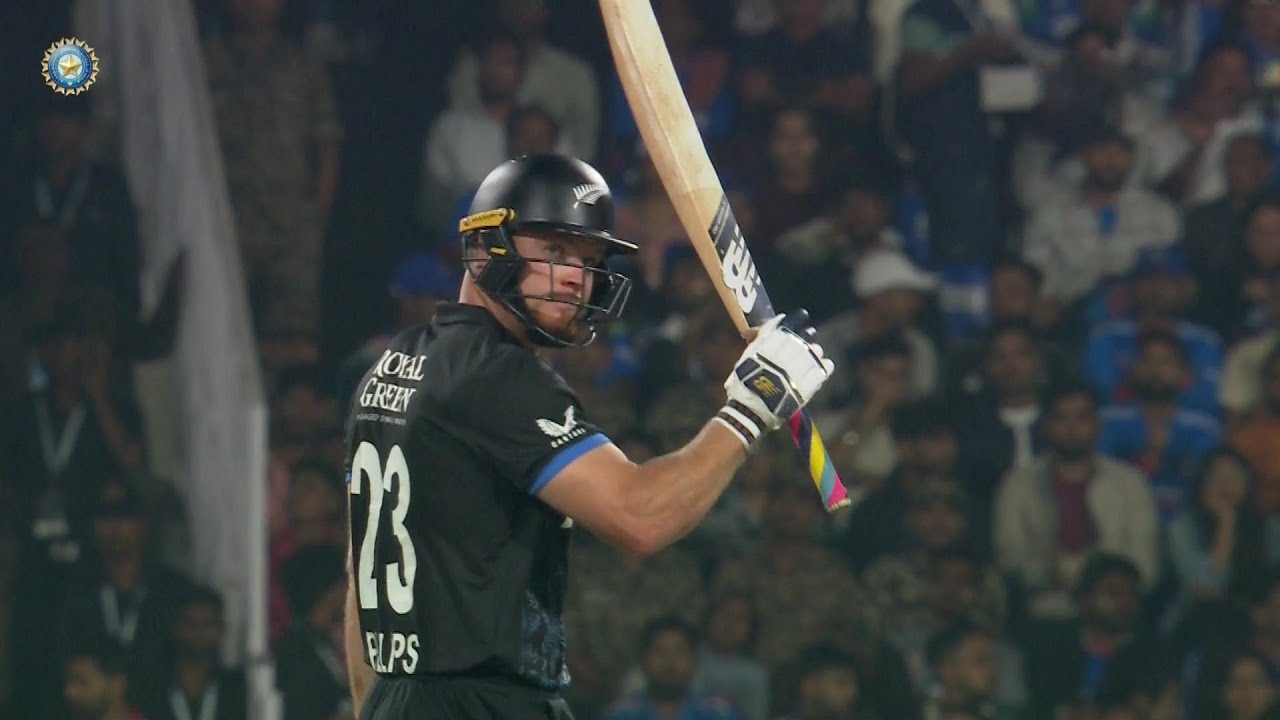
The cricketing rivalry between India and New Zealand added another exciting chapter on January 21, 2026, at the Vidarbha Cricket Association Stadium in Nagpur. In the first match of a five-game T20I series, India put on a batting masterclass to post a mammoth 238/7 in their 20 overs, eventually cruising to a convincing 48-run victory over the Kiwis, who managed 190/7 in response. This game marked the beginning of India’s preparations for upcoming global events, and boy, did they start with a bang! Abhishek Sharma’s explosive innings stole the show, but there were contributions across the board that highlighted India’s depth in T20 cricket.
Let’s dive into the match highlights, starting with India’s batting innings. After New Zealand captain Mitchell Santner won the toss and elected to field first – a decision that backfired spectacularly – India got off to a shaky start. Opener Sanju Samson, who also kept wickets, looked aggressive but fell early for 10 runs off 7 balls, including two boundaries, caught by Rachin Ravindra off Kyle Jamieson’s bowling. His partner, the young sensation Abhishek Sharma, however, turned the tide single-handedly. Abhishek smashed 84 runs off just 35 deliveries, peppering the boundary with 5 fours and a whopping 8 sixes at a strike rate of 240.00. His innings was a blend of power and precision, reaching his fifty in a mere 22 balls. He formed a crucial 99-run partnership for the third wicket with skipper Suryakumar Yadav, who contributed a steady 32 off 22 balls (4 fours, 1 six) before being caught by Tim Robinson off Santner.
Following Abhishek’s departure – caught by Jamieson off Ish Sodhi – the middle order kept the momentum going. Ishan Kishan, batting at number three, scored a quick 8 off 5 balls with two fours but was dismissed by Jacob Duffy. Hardik Pandya added 25 off 16 (3 fours, 1 six), providing a solid platform, while Shivam Dube smashed a quick 9 off 4 balls with one six. The real finisher was Rinku Singh, who remained unbeaten on 44 off 20 balls (4 fours, 3 sixes), accelerating towards the end with Axar Patel’s 5 off 5 and Arshdeep Singh’s unbeaten 6 off 6. Extras chipped in with 15 runs, mostly wides, as New Zealand’s bowlers struggled to contain the onslaught.
On the bowling front for New Zealand, Jacob Duffy was the pick with 2/27 in 4 overs, economical and effective in picking up key wickets like Kishan and Pandya. Kyle Jamieson also grabbed 2/54, including Samson and Dube, but leaked runs at 13.50 economy. Kristian Clarke, on his T20I debut, took 1/40, dismissing Patel. Ish Sodhi (1/38), Mitchell Santner (1/37), and part-timers like Glenn Phillips (0/20) and Daryl Mitchell (0/21) couldn’t stem the flow, with the Kiwis conceding over 11 runs per over.
Chasing 239 was always going to be tough, and New Zealand’s innings started disastrously. Opener Devon Conway was out for a two-ball duck, caught behind by Samson off Arshdeep Singh. Rachin Ravindra followed soon, scoring just 1 off 5, caught by Abhishek off Hardik Pandya. Tim Robinson provided some resistance with 21 off 15 (2 fours, 1 six) but fell to Varun Chakravarthy. The highlight for the Kiwis was Glenn Phillips, who blasted 78 off 40 balls (4 fours, 6 sixes) at a strike rate of 195.00, keeping hopes alive with a 79-run stand for the fourth wicket alongside Mark Chapman. Chapman himself played a fine knock of 39 off 24 (4 fours, 2 sixes), but once Phillips was dismissed by Axar Patel and Chapman by Varun, the chase fizzled out.
Daryl Mitchell scored 28 off 18 (4 fours), trying to rebuild, but was caught by sub-fielder Ravi Bishnoi off Dube. Santner remained not out on 20 off 13 (2 fours), and debutant Clarke was out for a golden duck. Kyle Jamieson finished with 1 not out off 2. Extras were minimal at 2. India’s bowlers shared the spoils: Varun Chakravarthy led with 2/37 in 4 overs, dismissing Robinson and Chapman. Shivam Dube impressed with 2/28 in 3 overs, getting Mitchell and Clarke. Arshdeep Singh (1/31), Hardik Pandya (1/20), and Axar Patel (1/42) each took one, while Jasprit Bumrah went wicketless but conceded 29 in 3 overs at 9.66 economy. Abhishek even bowled 0.3 overs for 3 runs.
Why did New Zealand lose? Several factors played into it. First, the early wickets put them on the back foot – losing two for just 1 run in the first two overs killed any momentum. The required run rate skyrocketed to over 12 per over early on, and despite Phillips’ heroics, the middle order couldn’t sustain the pressure against a varied Indian attack. Varun’s mystery spin and Dube’s medium pace proved tricky on a pitch that offered some turn and bounce. New Zealand’s bowlers were too expensive upfront, allowing India to post their highest T20 total against them, which psychologically weighed heavy. Fielding lapses, like dropped catches (India dropped two and missed a run-out), actually helped NZ a bit, but their own batting depth wasn’t tested well enough. Santner’s captaincy decisions, like delaying spin or not using Phillips more, might have cost them control.
This match was a statement from India, with Abhishek earning Player of the Match for his all-round show (84 runs and two catches). It sets up an intriguing series, with India leading 1-0. For New Zealand, they’ll need to bounce back in the second game on January 23.
For your website dcmindunicorn.com, I’d recommend embedding visuals to make the article pop. Here’s a great image of Abhishek Sharma in action during his blistering knock: